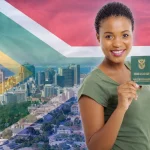



South African citizenship is governed by the Citizenship Act 88 of 1995 (as amended) and administered by the Department of Home Affairs. In plain terms, citizenship determines who holdsthe full bundle of rights that come with being South African; the right to a passport, the right to vote, and the right to live and work in the country without immigration conditions.
Whether you were born in South Africa, have a South African parent, married a citizen, or have lived here for years on permanent residence, this guide covers every route available in 2026, including the current position on dual citizenship following the Constitutional Court’s ruling in CCT184/23.
Related South Africa guides:
Table of Contents
1. Citizenship by Birth
Section 2 of the Citizenship Act 1995 provides that a child born in South Africa on or after 6 October 1995 is a citizen by birth if, at the time of birth, at least one parent is either a South African citizen or holds permanent residency. An exception applies where one parent is a foreign diplomat or was not lawfully admitted to South Africa and the other parent is not South African. Section 2(4) extends citizenship by birth to a child adopted in South Africa by a citizen, and to any child born in South Africa who would otherwise be stateless and whose birth is properly registered.
No Application Required – But Registration Is
A child who qualifies by birth is a citizen automatically. However, parents must still register the birth with Home Affairs by submitting Form DHA-24 (Notice of Birth) along with the child’s unabridged birth certificate and the parent’s proof of citizenship or permanent residence status. If birth registration is delayed, a DHA-288 affidavit is also required.
A child born in South Africa to two foreign parents, where neither parent is a citizen or permanent resident, is not a South African citizen by birth. This is a widespread and costly misconception. Always verify the qualifying status of at least one parent before assuming citizenship applies.
2. Citizenship by Descent
Section 3 of the Act covers children born outside South Africa. A child born abroad on or after 6 October 1995 is a citizen by descent if at least one parent was a South African citizen at the time of birth, and the birth is registered with Home Affairs within one year. Late registrations are possible but require ministerial approval.
How to Register
Registration is done at a South African embassy or consulate, or at a Home Affairs office. Parents submit Form DHA-24 (birth registration) and Form DHA-529 (Determination of Citizenship Status) together with:
- The child’s foreign unabridged birth certificate
- The South African parent’s ID book, Smart ID, or passport
- Parents’ marriage certificate (if applicable)
- A notarised consent letter from any non-South African parent
- Certified translations of any non-English documents
Processing through an embassy typically takes 3 to 4 months. After approval, Home Affairs issues an abridged South African birth certificate. The child may then apply for a South African passport. Children registered in this way may hold dual citizenship.
3. Citizenship by Adoption
Sections 2(4)(a) and 3(1)(b)(iii) of the Act give a child adopted by a South African citizen the same citizenship status as a biological child. A child adopted within South Africa by a citizen becomes a citizen by birth. A child born abroad and adopted by a South African becomes a citizen by descent, provided the adoption and birth registration are completed correctly.
For a domestic adoption, once the High Court order is granted, the adoption is registered using Form DHA-24 together with the adoption order and the adoptive parent’s South African ID. For intercountry adoptions, both the Department of Social Development and Home Affairs must approve
the adoption. Overseas documents must carry an apostille.
4. Naturalisation: Ordinary Route
An adult foreign national aged 18 or older may apply for naturalisation under Section 5 of the Citizenship Act. The Minister of Home Affairs must be satisfied that all of the following requirements are met.
Legal Requirements
- Permanent Residence: A valid South African permanent residence permit is required.
- Residence Period: At least one continuous year of ordinary residence immediately before the application, plus a further four years of ordinary residence during the eight years preceding the application. This totals five years within the last eight. Confirm the current operative requirement with the Department of Home Affairs before filing, as regulatory amendments may affect how this is applied.
- Good Character: No serious criminal record.
- Intention to Remain: The applicant must intend to continue residing in South Africa or to serve the country after naturalisation.
- Language: The applicant must be able to communicate in at least one official South African language.
- Civic Knowledge: Adequate knowledge of the rights and responsibilities of citizenship.
Application Steps
Step 1 – Determination of Citizenship (DHA-529). Before the naturalisation application, the applicant must confirm their current citizenship status by submitting Form DHA-529 to the Home Affairs Head Office or a South African mission abroad. Applications that skip this
step are rejected outright. Allow 6 to 12 months for a response.
Step 2 – Gather Documents. Only after receiving a positive determination should the applicant prepare the naturalisation application. Required documents include:
- Form DHA-63 (Application for Certificate of Naturalisation), completed in black ink
- Form DHA-757 (Supporting Affidavit for Naturalisation)
- Copy of the DHA-529 determination result
- Original and copy of the permanent residence permit
- SAPS police clearance (SAP-91, fingerprint-based, valid for 6 months)
- Foreign police clearance from every country of citizenship or long-term residence
- Proof of residence covering the qualifying period (utility bills, lease agreements, or bank statements)
- Evidence of language proficiency
- Marriage or divorce documents where applicable
- Two passport-sized photographs (for Form BI-9)
Step 3 – Submit. Lodge the complete packet at a Home Affairs live-capture office or South African mission. Online submission is also available through the eHomeAffairs portal for applicants inside South Africa.
Step 4 – Decision. If approved, Home Affairs issues a Certificate of Naturalisation. The applicant then applies for a South African ID (Form BI-9) and passport. If denied, the only recourse is judicial review under the Promotion of Administrative Justice Act. There is no internal appeal within the Citizenship Act.
Fees and Processing Time
The prescribed application fee is approximately ZAR 300 (USD 16, GBP 13, RMB 116) plus approximately ZAR 140 (USD 8, GBP 6, RMB 54) for the ID re-issue. Confirm current amounts with Home Affairs before filing, as fees are subject to change. Allow 6 to 12 months from submission to certificate, plus the prior 6 to 12 months for the determination step. In total, applicants should plan for 1 to 2 years from start to final certificate.
5. Citizenship by Marriage (Spousal Route)
South Africa does not grant automatic citizenship through marriage. A foreign spouse must first obtain permanent residence. After that, citizenship is applied for through the standard naturalisation procedure. Section 5(5) of the Act provides a reduced residence period for spouses of South African citizens compared to the ordinary route. However, the precise period is subject to a conflict between the Act and the official 2012 Regulations (GN R1122, Government Gazette 36054). Applicants must confirm the applicable requirement directly with the Department of Home Affairs or a qualified immigration attorney before filing.
The application process is identical to the ordinary naturalisation route, using Forms DHA-63, DHA-757, and the standard supporting documents, plus a marriage certificate. Marriage shortens the qualifying period but does not remove the need for permanent residence status or the full procedural steps.
Need help with a spousal citizenship application?
Speak to a licensed South African immigration attorney for advice specific to your situation.
6. Resumption of Citizenship
A person who was previously a South African citizen by birth or descent, but ceased to be one by acquiring another nationality under the old Section 6(1)(a) rule, may apply to resume their citizenship once they have returned to South Africa permanently. Section 13 of the Act gives the Minister discretion to reinstate citizenship in cases they deem appropriate.
Home Affairs has launched an online Citizenship Reinstatement Portal as part of the My Home Affairs platform. Applicants should use the portal where eligible. As of February 2026, the portal processes standard applications in approximately one hour. Complex cases or those handled outside the portal may take longer.
Submit Form DHA-175 (Application for Resumption of South African Citizenship) with proof of former citizenship – such as an old South African passport, ID book, or naturalisation certificate – and evidence of permanent return. Applications can be submitted at a Home Affairs office, a South African mission, or through the online portal.
Note that anyone who lost South African citizenship by acquiring another nationality without a retention certificate is legally deemed never to have lost it, following the Constitutional Court’s ruling in CCT184/23 (see Dual Citizenship section below). Such persons are automatically reinstated and do not need to file a resumption application.
7. Renunciation and Loss of Citizenship
An adult South African citizen may voluntarily renounce citizenship under Section 7 of the Act if the Minister approves. The applicant completes Form DHA-246 (Renunciation of Citizenship) in duplicate, surrenders their South African passport and ID, and provides proof of impending foreign citizenship. Upon the Minister’s registration of the renunciation, the person ceases to be a citizen.
The Act also allows the Minister to deprive a person of citizenship under Sections 8 and 9 in limited circumstances: fraud or false representation in obtaining naturalisation; dual nationals convicted of serious offences or deemed a threat to public interest; or unlawful use of a foreign citizenship. Such revocations are rare and handled case by case.
The old Section 6(1)(a) provision, which caused automatic loss of citizenship on acquiring another nationality without a retention certificate, has been declared unconstitutional and invalid from 6 October 1995. Automatic loss no longer applies. Form DHA-1664 (Retention of Citizenship) remains available for voluntary use but is no longer legally required.
8. Dual Citizenship Rules (2026)
South African citizenship is no longer involuntarily lost by acquiring another nationality. The Constitutional Court’s ruling in Democratic Alliance v Minister of Home Affairs (CCT184/23) declared Section 6(1)(a) of the Citizenship Act unconstitutional and invalid with effect from 6 October 1995. Anyone previously deemed to have lost South African citizenship under that provision is now treated as never having lost it. No prior government permission is required to
hold dual citizenship.
Note that some gov.za service pages have not yet been updated to reflect this ruling and may still display the old retention requirement. The court’s judgment is the controlling authority and supersedes any outdated page language. When in doubt, refer to the judgment in CCT184/23 directly or consult Home Affairs.
South African citizens are expected to use a valid South African passport when entering or departing South Africa. This is an existing policy requirement, not a new rule introduced in 2025.
Although retention is no longer legally required, dual citizens are encouraged to notify Home Affairs of their dual status when renewing passports or IDs to keep population register records accurate. Form DHA-1664 remains available for those who want a formal record. Children who are South African citizens by birth or descent are free to hold other citizenships and will retain their South African citizenship.
9. Comparison of Citizenship Routes
| Route | Who Qualifies | Residency Required | Key Forms | Processing Time | Fees (approx.) |
|---|---|---|---|---|---|
| By Birth | Child born in SA with at least 1 parent who is a citizen or permanent resident; or adopted by a citizen | None (automatic) | DHA-24; DHA-288 if late | Immediate within SA; days for registration | Standard birth registration fee |
| By Descent | Child born outside SA to at least 1 SA citizen parent | None (upon registration) | DHA-24, DHA-529 | 3-4 months (embassy) | None |
| By Adoption | Minor adopted by a South African citizen | None (upon adoption) | DHA-24, court adoption order | Same as birth registration | None |
| Naturalisation (Ordinary) | Adults 18+; SA permanent resident; good character; language and civics requirements met | 1 continuous year immediately before application + 4 years of preceding 8 (total 5 of last 8 years) | DHA-529, DHA-63, DHA-757, BI-9, SAP-91 | 1-2 years total including determination | ZAR 300 + ZAR 140 (ID) (USD 24, GBP 19, RMB 157 combined) |
| Naturalisation (Spousal) | Spouse of a SA citizen with permanent residence | Reduced period under Section 5(5) – confirm exact requirement with Home Affairs before filing | As for ordinary naturalisation, plus marriage certificate | 6-12 months | ZAR 300 + ZAR 140 (ID) |
| Resumption | Former SA citizen by birth or descent who has returned permanently | None | DHA-175 | ~1 hour via portal (standard); longer for complex cases | No specific fee |
10. Processing Times at a Glance
| Step | Estimated Time | Notes |
|---|---|---|
| Birth or descent registration | 3-4 months abroad; immediate within SA | Embassy processing adds time |
| Determination of Citizenship (DHA-529) | 6-12 months | Must be completed before naturalisation application |
| Naturalisation application | 6-12 months after submission | Total including determination: 1-2 years |
| Resumption via portal | ~1 hour (standard cases) | Per Home Affairs announcement, February 2026 |
| ID book or card after naturalisation | Weeks | Applied for at a Home Affairs office after certificate is issued |
11. Common Pitfalls
- Skipping the determination step: Applications for naturalisation without a prior DHA-529 determination are rejected outright. Always complete this step first.
- Child of two foreign parents: A child born in South Africa to two foreign parents, neither of whom is a citizen or permanent resident, is not automatically a South African citizen.
- Residency gaps: Personal travel abroad can break the continuous residence requirement. Government service abroad may count toward residency – include supporting service letters if relevant.
- Incomplete forms: Every question on Forms DHA-529 and DHA-63 must be answered. Blank fields cause delays or outright rejection.
- Police clearance expiry: SAPS police clearances are only valid for 6 months. Time your application accordingly.
- Marriage misconception: Marriage to a South African citizen does not by itself confer citizenship. Permanent residence and a qualifying residence period are still required. Confirm the applicable period for spouses directly with Home Affairs.
- Outdated government web pages: Some gov.za service pages still display pre-Constitutional Court language on dual citizenship. The ruling in CCT184/23 is the controlling authority.
- Relying on secondary sources alone: Immigration websites and advisory firms can provide useful practical context but must be verified against the Citizenship Act, official regulations, and current Home Affairs announcements before being treated as authoritative.
Sources
- South African Citizenship Act 88 of 1995
- Apply for SA Citizenship – South African Government (gov.za)
- Citizenship Regulations GN R1122 (Government Gazette 36054, 2012)
- South African Citizenship Act: Amendment Notice (June 2023 Gazette)
- Democratic Alliance v Minister of Home Affairs CCT184/23 – Constitutional Court
- Home Affairs: Final Phase Citizenship Reinstatement Portal (10 February 2026)
- Border Management Authority Statement on Citizenship Act (31 July 2025)
Community Discussion
0 commentsNo comments yet. Be the first person to start the conversation.